



A frame sits at the boundary between a painting and its surroundings. It can give a small work more breathing room, make a dark edge easier to read, or help an image belong on a busy wall. The best choice begins with the painting itself, including its materials and condition, before considering the furniture around it.
Compare several possibilities at once
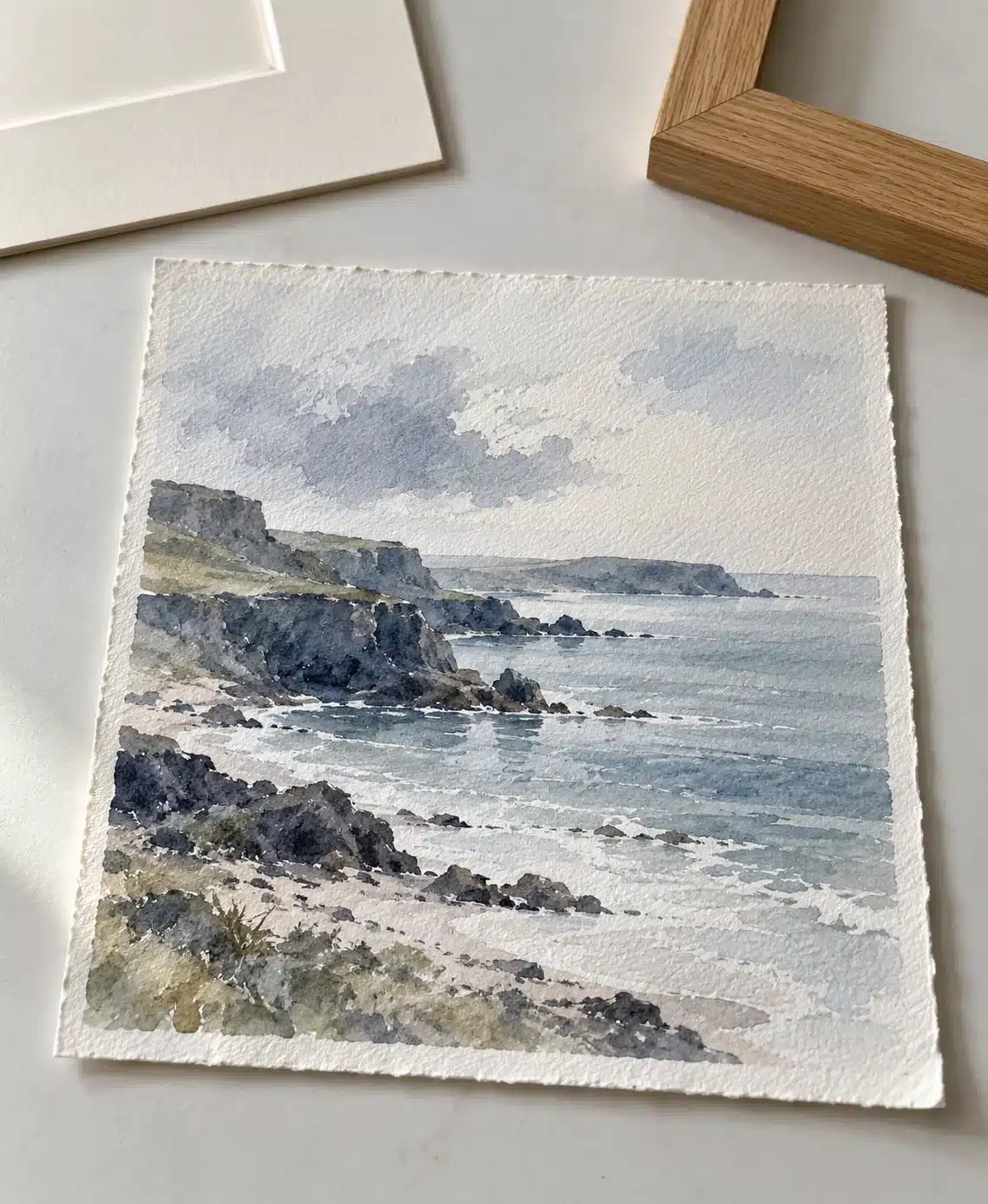
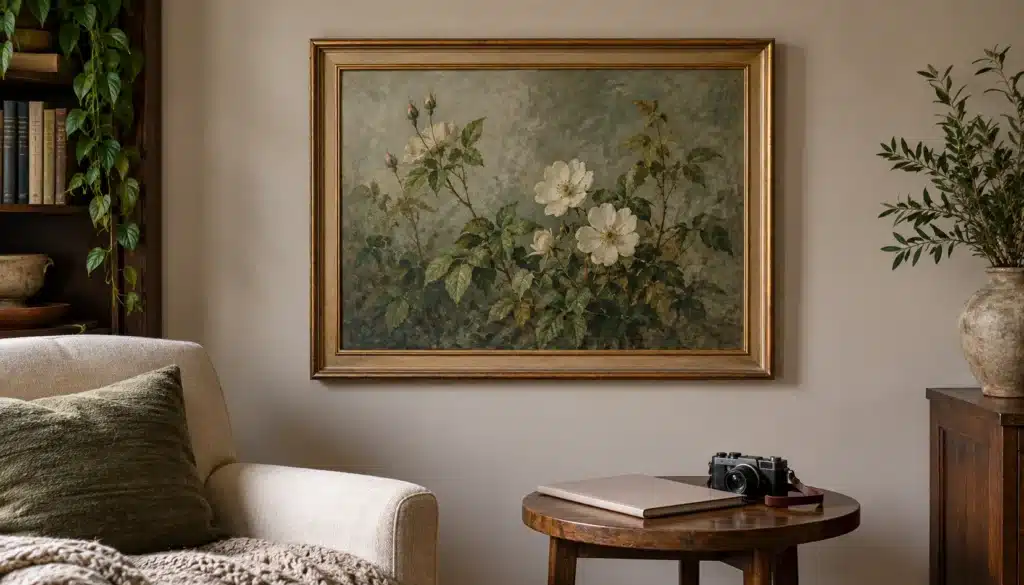
Look at frame samples beside the whole image rather than choosing from an isolated corner. A broad dark moulding may give one painting welcome structure but overwhelm another. A light timber can bring warmth, while a painted finish can echo a colour without matching it exactly.
Compare two or three options in the intended light if possible. Step back to see whether your eye goes first to the image or to the frame. Neither a plain frame nor an elaborate one is automatically more appropriate. The question is whether its presence helps you see the work as you would like to see it.
Think about width, depth and space
The face of the frame affects the apparent size of the painting. A mount around a work on paper adds another interval between image and wall. Measure the finished outside dimensions so that a framing decision does not accidentally change the scale of a planned arrangement.
Depth matters as well. A canvas, panel, or raised surface may need a different construction from a flat work on paper. A float-style presentation can reveal an edge, but it must be suitable for the particular support. Ask the framer to explain the physical solution, not only how the finished object will look.
Ask how the work will be held and protected
Discuss mounting, backing, glazing where appropriate, and any separation needed between the artwork and glazing. The answers depend on the materials. Avoid assuming that one universal framing package is right for every painting. For fragile, damaged, unusual, or valuable work, involve a qualified conservator as needed.
The Canadian Conservation Institute’s guidance on paintings explains that framing and protective components can help shield a work from handling and environmental risks. A frame is therefore more than an attractive border. Keep the aesthetic conversation alongside the practical one.
Consider reflections in the actual position
If glazing is required, check how nearby windows and lamps reflect from your usual viewing position. A showroom sample may behave differently at home. Ask about the available glazing options and their limitations, including how they are cleaned and whether they suit the size and support of the work.
Before commissioning a frame for a future Artsy artwork, confirm the real piece’s measurements, materials, and any existing frame information. Preview images cannot establish these physical details. Bring the framer clear photographs and reliable specifications, and choose a solution that lets the painting remain the centre of attention for years of ordinary viewing.












 English
  Spanish
  Italian
  French
  German
  Chinese
  Arabic
  Dutch
Dutch  Norwegian
  Polish
  Finnish
  Portuguese