



A painting becomes part of the rhythm of a room. You may pass it before breakfast, notice a small detail while reading, or see its colours differently as evening arrives. Choosing one begins with imagining that everyday relationship, rather than finding an image that looks impressive for a few seconds.
Start with what holds your attention
Browse without trying to decide immediately. Save a short selection and write one sentence about each work: perhaps you enjoy the quiet horizon, the restless marks, or an unexpected meeting of colours. Specific observations are more useful than a broad label such as “beautiful”. They help you recognise what you are responding to.
Return to the selection on another day. Some paintings reveal more with time; others give you everything at first glance. Either experience can be welcome. The point is to understand your own preference, including whether you want a calm background presence or an image that regularly asks for attention.
Consider the room as it is used
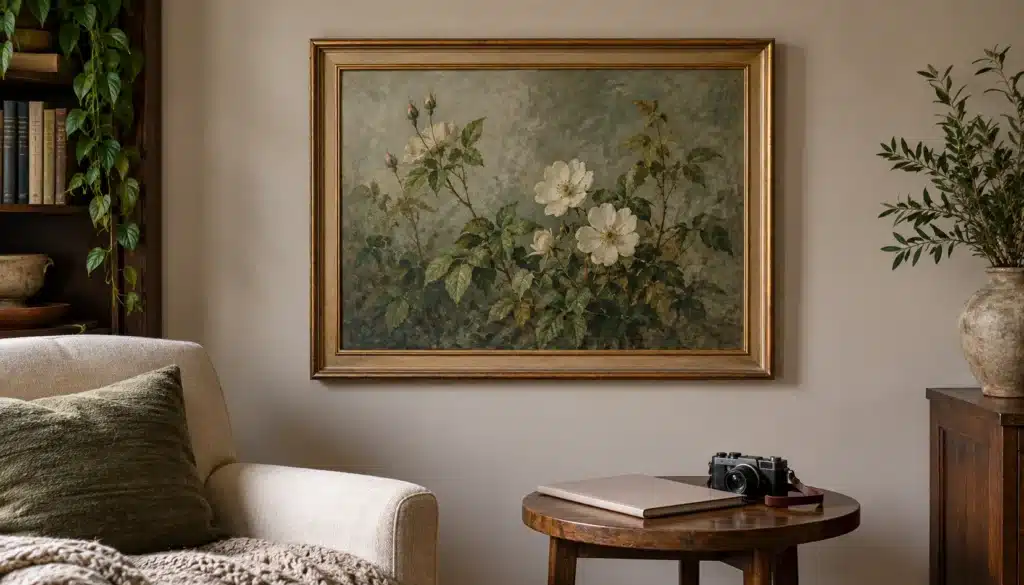
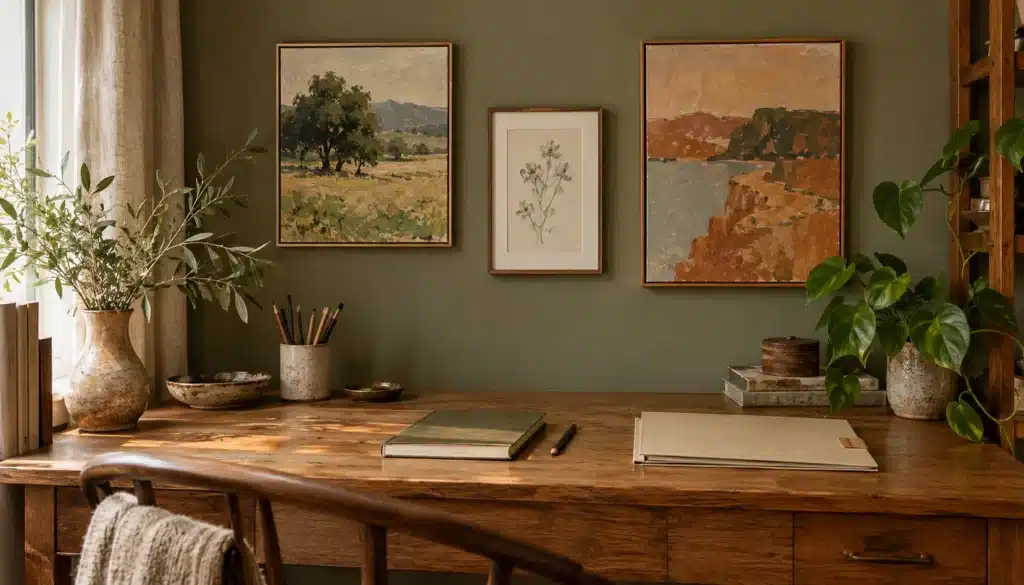
Look at the intended wall from the places where you actually sit, stand, or walk. A painting above a desk has a different relationship with the viewer from one seen across a living room. Note nearby furniture, door openings, busy patterns, and the amount of uninterrupted wall. These are practical conditions, not rules that require the art to match the sofa.
Try a paper rectangle at the proposed size, including the frame. Leave it in place long enough to see it in ordinary use. Check that doors, switches, and furniture still work comfortably around it. If the painting needs a protected display position, consider that requirement before becoming attached to a particular wall.
Compare the whole image and the details
Look at a full view before zooming in. Then examine the edges, surface, brushwork, and areas that seem especially important. A close photograph can help describe texture, but a screen cannot fully show the physical surface or guarantee exact colour. Ask for current photographs and confirmed dimensions when an actual work is offered.
Separate your visual preference from information that must be verified. The artist’s identity, medium, support, condition, framing, and availability should come from reliable listing details and a clear conversation. A persuasive description is not a substitute for those facts.
Give the decision a sensible boundary
Set a budget that leaves room for framing, delivery, and appropriate installation if those will be needed. There is no requirement to fill a wall immediately. A smaller work you keep enjoying can be more satisfying than a larger one chosen only to complete the room.
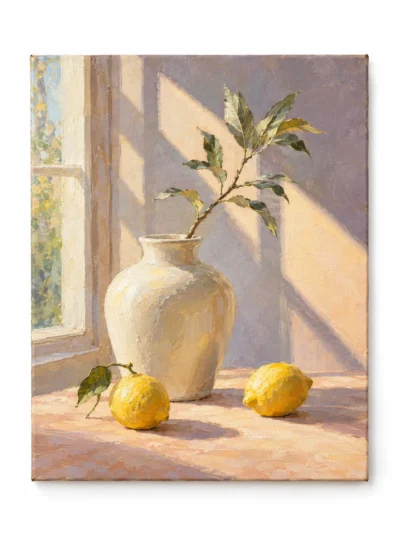
Artsy currently presents a preview catalogue for exploring visual directions. Its preview images are not evidence of physical stock or confirmed artwork specifications. Use them to clarify your preferences, then contact Artsy with the work or visual direction you would like to discuss.










 English
  Spanish
  Italian
  French
  German
  Chinese
  Arabic
  Dutch
Dutch  Norwegian
  Polish
  Finnish
  Portuguese